Church in Antigua

Church in Antigua

Friday, February 9, 2007

Nutrition and Food Security

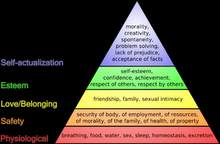
My Insights: In lecture 5, 2.8.07, our class talked about nutrition, food security and global health - like poverty and hunger, malnutrition, obesity, and agricultural food security.

First we went over some definitions related to food security such as:
  • Chronic Hunger - the condition of constant malnourishment or recurrent undernourishment and results in stunted growth. Affecting about 798 million.
  • Acute Hunger - severe undernourishment that causes wasting and starvation and is addressed with emergency food and aid. Affecting about 67 million.
  • Hidden Hunger - micronutrient and vitamin deficiencies which are often seen in obese and overweight. Affecting about 2 billion.

We talked about how 40 thousand children die each day because of poverty and hunger and most of these deaths happen in India, Sub-Saharan Africa, and China. I thought it was interesting that China's numbers, while daunting, are rapidly improving and a large number of those are moving into a healthier status, which is indicative of political and economic improvements in China.

There's something I'd like to mention. Both developed and developing nations are experiencing problems related to food and health. The developed nations are dealing with over consumption issues like obesity and malnourishment. For the record, obesity doesn't equate to healthy individuals; in fact, many who are obese are not receiving a balance in their intake of recommended daily allowance of both micro and macro nutrients including: vitamins, minerals, fats, carbohydrates and protein for optimum health. The reasons for malnutrition include: over consuming some nutrients and neglecting others all together, or simply eating above the recommended daily allowance; this becomes unsafe. Eating at a level of upper intake limitations is dangerous and terminal and toxic; many people consume foods high in saturated and trans fatty foods, YES, eating too many of these can be toxic especially in terms of people developing diabetes, cancers and heart disease.

On the other hand, developing nations are dealing with issues of food insecurity where many are not even capable of accessing food on a routine basis and are undernourished.

My take, why don't we implement a weight watchers type of system in the public school system which centers around portion sizes and eating a balance of healthy foods that satiate appetite. Teach people from a young age about the importance of not overeating in our developed nation.

Great quote:
"There's enough on this planet for every one's need
but not for every one's GREED."
- Mahatma Gandhi

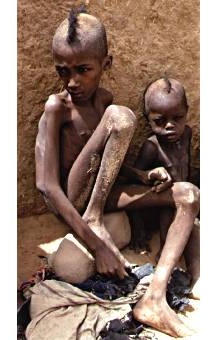
Graphic reference: Seeing images of poor undernourished children as well as the images of the sad and paralyzed obese.

Interesting Link to Radio Piece on Global Obesity: talking about the rate of obesity in France has doubled in recent years, to 12 percent — a figure approaching U.S. fat stats. http://www.npr.org/templates/story/story.php?storyId=6994649

Presentation Info: Jack and Emma discussed agriculture as a way to improve economic conditions. There was some debate over whether agriculture should be pushed in regions of corruption and war where this seems to be low on the agenda - but we felt that these are typically the regions who need the most help economically and would benefits most from these interventions.


Friday, February 2, 2007

Non-Infectious Diseases

My Insights: In lecture 4, 2.1.07, our class talked about non-infectious diseases globally - like Cancer, Heart Disease, Stroke, Diabetes, and Genetics. There was a lot to cover and I found myself really interested in the topics we discussed; it was very thought provoking and I only wish I was this interested in other classes throughout my schooling.

There's something I'd like to mention. There is a unique way to think about the approach of public health professions and that is as damage controllers, in the case where they are in the world treating preventable conditions such as AIDS victims, when the world already has a epidemic on their hands. The second approach to public health is to deliver prevention to those who need it, like the people who are becoming obese, which is a risk factor for developing heart disease, diabetes, and cancers. Most of the PH people I talk to imagine that they will spend their careers preventating the onset of diseases through awareness and education.

But education and awarness simply isn't enough. People don't typically proact - they react. People get haircuts when their hair is too long, they don't get their haircut 2 months before it needs cutting. Many people think of their health the same way... they don't need to exercise - they look attractive, healthy, why worry?

I think as PH professionals we need to change the way insurance programs work, and maybe implement an idea where when people come into the office and they show precursor signs of disease, they should be enrolled in modifiable lifestyle programs. Impossible I'm sure, but it's my two sense anyway.

Great quote:
"The Superior Physician prevents sickness;
The Mediocre Physician attends to impending sickness;
The Inferior Physician treats actual sickness."
- Traditional Chinese Proverb
Graphic reference: Smegma (foreskin) increases cancer in women.

Presentation Info: I even gave a presentation, with my lovely class mateWilson, on cardio vascular disease - and in the process of doing research I found some great information on the National Geographic website plus the video we used in our presentation. http://www7.nationalgeographic.com/ngm/0702/feature1/

Tuesday, January 30, 2007

Infectious Diseases

Lecture from 1.25 was all about communicable ( infectious diseases). It reminded me of the first day of class when Professor Shahi said, "It's a wonder that so many people cram themselves into airplanes with all sorts of germs and bacteria, share the same air for a period of hours, and walk away clean from disease."

I thought of exposure and forces of health three reasons. 1 - immunity from immunizations, 2 - how fortunate enough to live in a sanitary environment, I am to have a high level of health as to be able to fight off foreign diseases, 3 - a pandemic is imminent.
  1. Immunizations - those countries and people who can afford immunizations at birth (that aren't weighed down with mercury) typically do benefit by being immune to contracting awful diseases like smallpox.
  2. Rich vs. Poor - "...diseases hide among the poor." That's why Malaria is in S. Africa and not in the USA. The USA has paid for land reform eliminating swamp lands, and curing the people from the disease - so mosquito's can't pass it along.
  3. most infectious diseases are first introduced to a community kills a handful of people... and a few years later the disease returns as a fiercely fatal pandemic (i.e. the Spanish plague). It kind of makes us think that after SARS in 2003/2004 we were introduced to this corona virus, and since then we as a global community should be humming the jeopardy tune and waiting around for the avian flu to return in a similarly horrid manner.
The final point I have to make is that, "neglected diseases" affect as many individuals worldwide in mortality and morbidity as AIDS, for which there is AIDS day, numerous AIDS foundations, walks and charitable ideas; but the neglected diseases such as elephantitis are typically not on the public health officials' agenda.

Wednesday, January 24, 2007

RevolutionHealth.com

In years past, people could search on www.webmd.com for free medical information, but there's an article about Steven Case, an entreprenur, who is waging that consumers will pay up to $100 annually for premium health services on the new website: www.RevolutionHealth.com. He is claiming to "remake" the health care system by including interactive chats, information, storing and maintaining personal health records (i.e. a one stop shop). Here is a link to the article.


http://online.wsj.com/article/SB116943004976583309-search.html?KEYWORDS=revolution+health&COLLECTION=wsjie/6month

Monday, January 22, 2007

Lecture 1.18.07 - Globalization, Development and Health

My opinion on 2 topics raised… Controversy between the expanding pie vs. the fixed pie – is there an end point to our resources? I believe not – is there an end to how much someone can smile, no way – if you wanna smile you’ll find a way, if we want everyone to be healthy - we will find a way. Also, I loved it when Professor Shahi said, "a true way to measure the test of human development is to look at the wealthiest children and the poorest children in a region – and if both have a chance to survive – then the society has a chance to thrive" (but I guess this only is possible in communist societies where everyone is given the same opportunities to flourish).

Globalization is a controversial topic because overall its implications are beneficial to those who follow suit with emerging trends, but it can also be detrimental to those who aren’t able to broaden their horizons and go global. The point to take away from this lesson was that we, as members in the public health profession cannot be negligent to addressing all side effects of globalization (inequalities in sanitation, life expectancy, access to healthcare, safety). We must acknowledge and create policies so that adopting globalization can go smoothly. It will be essential to continue to globally research and respect the benefits of globalization for as long as we can work together as a world to be healthy and safe together.

https://blackboard.usc.edu/courses/1/20071_pm_565_41128/content/_267071_1/Emerging%20Trends%20in%20Health%20slides%202.ppt?bsession=200346&bsession_str=session_id=200346,user_id_pk1=2023,user_id_sos_id_pk2=1,one_time_token=#263,8,The North/South; Rich/Poor Divides

Our class discussions this week were very interesting because we talked about how globalization can bring about two types of implications when introduced to a society. It can first bring about change in a positive manner and this happens … so long as the people “ride the wave,” welcoming and adjusting to new ideals such as innovations in technology like industrialization with factories. The other way globalization affects people is negatively. This happens when resisting change causes people to become marginalized in ways both socio-economically, politically and they then suffer. This is an issue is when a society has both innovators and laggards within the same boundaries. A gap evolves to separate the innovators from the laggards which creates a rich/ poor, urban/rural, north/south divide – which affects everything from human development to safety and security, or as Dr. Shahi said, “The haves, and the have-nots.”

Wednesday, January 17, 2007

Great Article 1.16.07

I read the most amazing article in the WSJ this morning it's about the public health care system in China. It's called, "In China, Preventative Medicine Pits Doctor Against System" by Andrew Browne.
http://online.wsj.com/article/SB116891144192977210.html?mod=hps_us_pageone

The article talks about how in Dr. Hsu, provides free medical advice on, "how to avoid high blood pressure," and he also dispenses cheaper medications (i.e. generic drugs vs. brand name options), which has made him an outcast among physicians and medical professionals in China. The bottom line as the article stated, Dr. Hsu is bad for business profits because encouraging prevention lowers the number of sick people needing medical attention and expensive drug prescriptions.

Health care in China is privatized, and the most startling statistic mentioned is that 2/3 of the 1.3 billion population have no health insurance and must pay up front for treatment, and if they cannot, the hospitals refuse treatment. The article mentions that those who have money have the opportunity to live, but those without money, "wait to die." Forty-three percent of hospital patients in 2003 discharged themselves early, against medical advice, and 2/3 of them because they had no more money, based on findings from the Chinese Health Ministry. In one instance a three or four year-old boy was rushed into a hospital suffering from the toxic effects of pesticide poisioning. Doctors told the man to get more cash before they would help the child, so he left to get the money and when he returned to the hospital it was too late, the child had already died. This incident angered some 2,000 people who mobbed the hospital.

In this country, the physician income is comparable to the average income, but phyisicans can make multiple times their salary as they order more numbers of expensive tests per patient: such as cat scans, pace makers and laser surgeries - the more ordered the more cash flow it added to their salaries.

Monday, January 15, 2007

Readings after Lecture 1.11


Week 1 - Global Health Issues
I've done the readings and watched the videos for weeks one and two, and I've began to reassess the way that I perceive the world as a westerner, similar to Professor Hans Rosling suggested, "Us as the western world, and them as the third world."

I have to agree that I have always believed that there are greater disparities between the two worlds. In all actuality there is such a spectrum of health disparities within each country that there is no telltale way to homogenize health descriptions of a country or region becuase the best health care of the third world may be better than the worst care of the western world.

In regards to the 8 Millenium Developed Goals by 2015 all I can say is wow, what an ideal. The MDGS 8 ideals, see pitcure above. I feel so synical to think that none of these will be acheived - but I have a hard time believing that our nation will contribute to these goals internationally when all our politians in DC seem to be focused on is winning a war that we are under staffed, ill-equipped to win - and yet determined to stay the course for however long stubborness guides the way. As some are calling it, the worst foreign-policy blunder since the Vietnam War.

Week 2 - Does Inequality Matter?
Plato once said, “There should exist among the citizens neither extreme poverty nor again excessive wealth”, he wrote, “for both are productive of great evil,” a very biased opinion at inequality... if I don't say so myself. However, there is a substantial amount of evidence to support this statement - in the areas of wealth, religion, gender, ethnicity. As case examples Pakistan and their unequal gener issues along with their coinciding decreased economic growth; as well as Bolivia and Ecuador's conflict about natural resources between wealthy and the poor indigenous people and overall decreased outputs.

I really agreed with the idea that there is a strong correlation between poverty and inequality. One really cool thing that I liked from one reading was about comparing the average income of the poorest 20% of the people, as a way to compare statistics as opposed to comparing average income of countries.

The video looking at Taiwan, Vietnam and Kenya was very eye opening. I didn't realize how important globalization is to benefitting the economy and living conditions. I am very impressed at how far Taiwan has come, and I found it very unique that the Kenyans said that when they needed food during drought - no food was aided, but when they were harvesting wheat - wheat was imported with an overabundance and market competition. Here's the video link: http://video.google.com/videoplay?docid=5633239795464137680&q=globalization&hl=en

The second video posed an issue, why do we only think about health or safety when it is challenged."
Most shocking, was the part about the Marshall Islands have endured with the 67 bombs... and their aftermath of harming the regional inhabitants. Here's the video link: http://video.google.com/videoplay?docid=-2366159791400068176&q=globalization&hl=en