Church in Antigua

Church in Antigua

Thursday, March 8, 2007

Technology Innovations


My Insights: Here are four challenges and great themes in the 21st century.


  • Integration of out international perspectives

  • Translating research into technological innovation

  • Create partnerships and alliances across industries

  • Demonstrate value and wealth through entrepreneurial ideas.

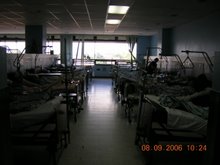
My initial thoughts to these four challenges is that they are redundant and simplistic but unfortunately these themes are still not a reality. It's easier said than done to envision a world who already follows all four of these ideals. We, as the United States are not yet integrating our technological advances, knowledge, resources and wealth with those in the developing nations (as we are a capitalistic nation) but we must integrate with each other. We must continue to translate new emerging ideas into technological advances. Yesterday, I read about the realization of providing HIV tests to those in the ER, in Los Angeles County, and providing test results to patients in a one hour turn-around time. The problem stated was that many people do not know they are carrying the HIV virus and for up to 10 years on average, it goes undiagnosed (according to NPR). Those who do take the HIV tests, have a tendency to not return after the two-week wait period and show up for the in-person deliverance of results. In other words, the waiting period is lengthy and the results are only given when patients show up in person, which is rather daunting to most (according to wsj.com). Anyways, translating the idea of awareness of HIV into technology is such as amazing idea for two reasons:


  1. Public health officials hope of improving health care delivered to those with HIV because an earlier diagnoses can help in delivering accurate treatment of HIV patients who are accessing basic and other services, and

  2. Reducing the number of incidence cases appearing because the assumption is that when people know they are HIV positive, they will take precautions to reduce the spread through sexually protected scenarios.

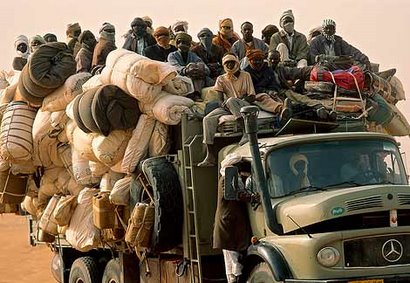
Graphical References: With rapid increases in biomedical sciences, millions of people living in developing countries are in situations of dire poverty with limited access to clean water sources, food, safety, homes and even basic health care. Why cannot the developed countries devote more resources with the potential for science and technology to merge to improve living conditions, control disease and improve lives.

Inspirational Quotes: "Discovery is seeing what everyone else has seen and thinking what no one else has thought." - Albert Szent-Gyorgi

Wednesday, March 7, 2007

Environment, Sustainability and Health

My Insights: From the reading, I learned about the unique relationship between... environmental pitfalls and poverty. I never really considered povery a link to environmental problems, but after the reading I do see a connection.

"Many environmental problems stem from poverty—often contributing to a downward spiral in which poverty exacerbates environmental degradation and environmental degradation exacerbates poverty. In poor rural areas, for example, there are close links among high infant mortality, high fertility, high population growth and extensive deforestation, as peasants fell tropical forests for firewood and new farmland..." - United Nations Development Programme (2003). Chapter 6 - Public Policies to Ensure Environmental Sustainability. Human Development Report 2003. Oxford University Press.

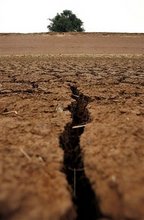
Graphical Image: Global warming is causing deserts to become drier which causes drought and famine (called desertification - like the Sahara in Africa); and ocean temperatures to raise and become warmer which will cause violent weather patterns like flooding, hurricanes and tornadoes (as in the Atlantic Ocean) .

Two Contrasting Unique Quotes on global warming that unfortunately have divided the people of United States:
"Two thousand scientists, in a hundred countries, engaged in the most elaborate, well organized scientific collaboration in the history of humankind, have produced long-since a consensus that we will face a string of terrible catastrophes unless we act to prepare ourselves and deal with the underlying causes of global warming."
AL GORE, speech at National Sierra Club Convention, Sept. 9, 2005

“...we have an environmental movement that is run by people who want to fight, not to win.”
Dr Patrick Moore, founder member of Greenpeace,writing in the Mail on Sunday, May 2000

Mind, Behavior and Global Health

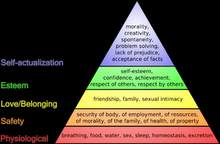
My Insights: In lecture 6, 2.16.07, we talked about mind and spirituality. I think the most memorable part of the lecture was when we talked about Maslow's Hierarchy of Needs pyramid. This is such a simplistic was to look at emotional and mental needs but I do agree that it is a great overview. It is cheifly suggesting that each individual has a set of needs, and with each step up the pyramid the individual is able to attain more superficial needs. For example the bottom-up approach is...
  1. Physiological - eat, breathe, water and sex
  2. Safety - security and health
  3. Loving/Belonging - family, relationships, intimacy
  4. Esteem - self esteem
  5. Self-Actualization - morality, creativity, spontaneity
Great Quote: it made me think of how powerful the mind is in relation to one's own reality.
"Let the beauty of what you love be what you do." - Middle Eastern quote

Friday, February 9, 2007

Nutrition and Food Security

My Insights: In lecture 5, 2.8.07, our class talked about nutrition, food security and global health - like poverty and hunger, malnutrition, obesity, and agricultural food security.

First we went over some definitions related to food security such as:
  • Chronic Hunger - the condition of constant malnourishment or recurrent undernourishment and results in stunted growth. Affecting about 798 million.
  • Acute Hunger - severe undernourishment that causes wasting and starvation and is addressed with emergency food and aid. Affecting about 67 million.
  • Hidden Hunger - micronutrient and vitamin deficiencies which are often seen in obese and overweight. Affecting about 2 billion.

We talked about how 40 thousand children die each day because of poverty and hunger and most of these deaths happen in India, Sub-Saharan Africa, and China. I thought it was interesting that China's numbers, while daunting, are rapidly improving and a large number of those are moving into a healthier status, which is indicative of political and economic improvements in China.

There's something I'd like to mention. Both developed and developing nations are experiencing problems related to food and health. The developed nations are dealing with over consumption issues like obesity and malnourishment. For the record, obesity doesn't equate to healthy individuals; in fact, many who are obese are not receiving a balance in their intake of recommended daily allowance of both micro and macro nutrients including: vitamins, minerals, fats, carbohydrates and protein for optimum health. The reasons for malnutrition include: over consuming some nutrients and neglecting others all together, or simply eating above the recommended daily allowance; this becomes unsafe. Eating at a level of upper intake limitations is dangerous and terminal and toxic; many people consume foods high in saturated and trans fatty foods, YES, eating too many of these can be toxic especially in terms of people developing diabetes, cancers and heart disease.

On the other hand, developing nations are dealing with issues of food insecurity where many are not even capable of accessing food on a routine basis and are undernourished.

My take, why don't we implement a weight watchers type of system in the public school system which centers around portion sizes and eating a balance of healthy foods that satiate appetite. Teach people from a young age about the importance of not overeating in our developed nation.

Great quote:
"There's enough on this planet for every one's need
but not for every one's GREED."
- Mahatma Gandhi

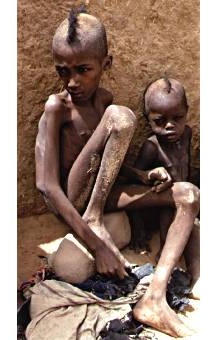
Graphic reference: Seeing images of poor undernourished children as well as the images of the sad and paralyzed obese.

Interesting Link to Radio Piece on Global Obesity: talking about the rate of obesity in France has doubled in recent years, to 12 percent — a figure approaching U.S. fat stats. http://www.npr.org/templates/story/story.php?storyId=6994649

Presentation Info: Jack and Emma discussed agriculture as a way to improve economic conditions. There was some debate over whether agriculture should be pushed in regions of corruption and war where this seems to be low on the agenda - but we felt that these are typically the regions who need the most help economically and would benefits most from these interventions.

Friday, February 2, 2007

Non-Infectious Diseases

My Insights: In lecture 4, 2.1.07, our class talked about non-infectious diseases globally - like Cancer, Heart Disease, Stroke, Diabetes, and Genetics. There was a lot to cover and I found myself really interested in the topics we discussed; it was very thought provoking and I only wish I was this interested in other classes throughout my schooling.

There's something I'd like to mention. There is a unique way to think about the approach of public health professions and that is as damage controllers, in the case where they are in the world treating preventable conditions such as AIDS victims, when the world already has a epidemic on their hands. The second approach to public health is to deliver prevention to those who need it, like the people who are becoming obese, which is a risk factor for developing heart disease, diabetes, and cancers. Most of the PH people I talk to imagine that they will spend their careers preventating the onset of diseases through awareness and education.

But education and awarness simply isn't enough. People don't typically proact - they react. People get haircuts when their hair is too long, they don't get their haircut 2 months before it needs cutting. Many people think of their health the same way... they don't need to exercise - they look attractive, healthy, why worry?

I think as PH professionals we need to change the way insurance programs work, and maybe implement an idea where when people come into the office and they show precursor signs of disease, they should be enrolled in modifiable lifestyle programs. Impossible I'm sure, but it's my two sense anyway.

Great quote:
"The Superior Physician prevents sickness;
The Mediocre Physician attends to impending sickness;
The Inferior Physician treats actual sickness."
- Traditional Chinese Proverb
Graphic reference: Smegma (foreskin) increases cancer in women.

Presentation Info: I even gave a presentation, with my lovely class mateWilson, on cardio vascular disease - and in the process of doing research I found some great information on the National Geographic website plus the video we used in our presentation. http://www7.nationalgeographic.com/ngm/0702/feature1/

Tuesday, January 30, 2007

Infectious Diseases

Lecture from 1.25 was all about communicable ( infectious diseases). It reminded me of the first day of class when Professor Shahi said, "It's a wonder that so many people cram themselves into airplanes with all sorts of germs and bacteria, share the same air for a period of hours, and walk away clean from disease."

I thought of exposure and forces of health three reasons. 1 - immunity from immunizations, 2 - how fortunate enough to live in a sanitary environment, I am to have a high level of health as to be able to fight off foreign diseases, 3 - a pandemic is imminent.
  1. Immunizations - those countries and people who can afford immunizations at birth (that aren't weighed down with mercury) typically do benefit by being immune to contracting awful diseases like smallpox.
  2. Rich vs. Poor - "...diseases hide among the poor." That's why Malaria is in S. Africa and not in the USA. The USA has paid for land reform eliminating swamp lands, and curing the people from the disease - so mosquito's can't pass it along.
  3. most infectious diseases are first introduced to a community kills a handful of people... and a few years later the disease returns as a fiercely fatal pandemic (i.e. the Spanish plague). It kind of makes us think that after SARS in 2003/2004 we were introduced to this corona virus, and since then we as a global community should be humming the jeopardy tune and waiting around for the avian flu to return in a similarly horrid manner.
The final point I have to make is that, "neglected diseases" affect as many individuals worldwide in mortality and morbidity as AIDS, for which there is AIDS day, numerous AIDS foundations, walks and charitable ideas; but the neglected diseases such as elephantitis are typically not on the public health officials' agenda.

Wednesday, January 24, 2007

RevolutionHealth.com

In years past, people could search on www.webmd.com for free medical information, but there's an article about Steven Case, an entreprenur, who is waging that consumers will pay up to $100 annually for premium health services on the new website: www.RevolutionHealth.com. He is claiming to "remake" the health care system by including interactive chats, information, storing and maintaining personal health records (i.e. a one stop shop). Here is a link to the article.


http://online.wsj.com/article/SB116943004976583309-search.html?KEYWORDS=revolution+health&COLLECTION=wsjie/6month